Queer Places:
University of Oxford, Oxford, Oxfordshire OX1 3PA
St Edmund's Church, Forest Gate, 462 Katherine Rd, London E7 8NP, United Kingdom
8 Abercorn Pl, London NW8 9XP, UK
St. Mary's Roman Catholic Cemetery, 679-681 Harrow Rd, London NW10 5NU, United Kingdom
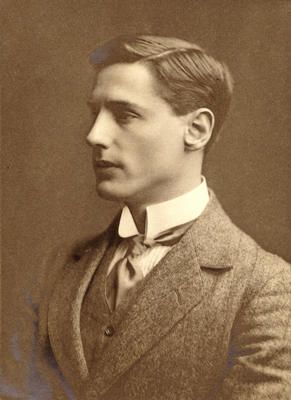 Christopher Sclater Millard (November 7, 1872 - November 21, 1927) was born on November 7, 1872, in Basingstoke, Hampshire, England, as the second son of
James Elwin Millard, an Anglican clergyman and Fellow of Magdalen College, Oxford, and Dora Frances Sclater. He received his early education at
Bradfield College and St Mary's Basingstoke before matriculating at Keble College, Oxford. In accordance with his father's ambitions for him to enter the
Church, Millard studied theology and graduated with a B.A. in 1894. During his university years, he developed a deep commitment to Jacobitism, joining
the Legitimist Jacobite League of Great Britain and Ireland, a leading group in the Neo-Jacobite Revival of the 1890s. Though he attended Salisbury
Theological College to prepare for the priesthood, he ultimately converted to Roman Catholicism.
Christopher Sclater Millard (November 7, 1872 - November 21, 1927) was born on November 7, 1872, in Basingstoke, Hampshire, England, as the second son of
James Elwin Millard, an Anglican clergyman and Fellow of Magdalen College, Oxford, and Dora Frances Sclater. He received his early education at
Bradfield College and St Mary's Basingstoke before matriculating at Keble College, Oxford. In accordance with his father's ambitions for him to enter the
Church, Millard studied theology and graduated with a B.A. in 1894. During his university years, he developed a deep commitment to Jacobitism, joining
the Legitimist Jacobite League of Great Britain and Ireland, a leading group in the Neo-Jacobite Revival of the 1890s. Though he attended Salisbury
Theological College to prepare for the priesthood, he ultimately converted to Roman Catholicism.
Following his education, Millard pursued a career in teaching, taking a position at Ladycross Preparatory School in Bournemouth before becoming the
headmaster at St Catherine's College, a Catholic school in Woodford Wells, Essex. His employment there was abruptly terminated in 1899 due to an improper
relationship with a pupil, leading him to leave in 1904 and support himself as a private tutor in Wadhurst, Sussex, and later in Iffley, near Oxford.
Around this time, he began publishing articles on Jacobitism and developed a active interest in socialism and the Labour Party.
Millard’s life as an openly queer man in early 20th-century Britain was marked by intense legal persecution under contemporary anti-homosexuality
laws. In April 1906, he was arrested at Iffley and charged with two counts of gross indecency under Section 11 of the Criminal Law Amendment Act 1885,
known as the Labouchere Amendment, which criminalized all sexual acts between men. To avoid a far more severe charge of sodomy that carried up to ten
years of penal servitude, Millard pleaded guilty and served three months of imprisonment with hard labour.
Upon his release, Millard moved in with his brother, the Reverend Elwin Millard, at St Edmund's vicarage in Forest Gate, East London. During this
period, Wilde's literary executor, Robert Baldwin Ross, helped Millard secure a position at The Burlington
Magazine, then edited by More Adey and Roger Fry. Shortly thereafter, Millard
formed a lifelong friendship with Charles Scott Moncrieff, the future translator of
Marcel Proust, who was then a student at Winchester College. Finding England difficult after his conviction,
Millard spent several months living in France in 1907 before returning permanently to London.
Millard's primary legacy rests on his meticulous literary scholarship dedicated to Oscar Wilde, which he
conducted largely under the pseudonym Stuart Mason. Having begun compiling Wildeana around 1900 in collaboration with Robert Ross and
Walter Edwin Ledger, Millard made a emotional pilgrimage to Wilde's original grave in Bagneux, France,
in 1904 alongside Wilde's biographer Robert Sherard. Under his pseudonym, Millard published a translation of
André Gide's study of Wilde, Prétextes, in 1905, followed by a detailed catalogue of Wilde's poetry in 1907,
dedicated to Scott Moncrieff. In 1908, he released Oscar Wilde: Art and Morality, a defense of The Picture of Dorian Gray, alongside a privately printed
bibliography. He compiled The Oscar Wilde Calendar in 1910 and published Oscar Wilde: Three Times Tried in early 1912, providing the first complete
account of Wilde's legal proceedings, which later served as the foundation for the 1960 feature film The Trials of Oscar Wilde.
In July 1914, Millard published his landmark work, the Bibliography of Oscar Wilde, which received wide critical acclaim and proved essential in
helping Robert Ross establish copyright protections for the Wilde estate. Beyond compilation, Millard actively protected Wilde's literary legacy against
false attributions and forgeries. This dedication culminated in 1926 when he was sued for libel by publishers Hutchinson and Methuen after circulating a
letter accusing them of knowingly publishing a forged play, For Love of the King, falsely attributed to Wilde; despite the court agreeing the play was a
fake, the jury decided against Millard.
Millard served as the private secretary to Robert Ross starting in 1911. This association pulled him into public legal controversies involving Wilde’s
inner circle. In 1914, he testified on Ross's behalf in a libel suit against Lord Alfred Douglas and
Thomas William Hodgson Crosland, who had conspired to accuse Ross of gross indecency with a
young man named Charles Garratt. Millard had previously met Garratt in 1913 and engaged in a short sexual
relationship with him. When Garratt was later arrested for importuning, Millard appeared in court as a character witness, prompting press coverage that
drew Douglas's attention. Though Ross briefly dismissed Millard upon learning of the connection, he soon reinstated him out of appreciation for Millard's
loyalty on the witness stand.
World War I brought further disruption to Millard's life. In September 1916, partly to evade a second pending charge of gross indecency, he fled
London for Northumberland before enlisting as a private in the Royal Fusiliers. After serving in France, he was invalided back to England, honorably
discharged in July 1917, and subsequently employed as a telegram decipherer for the War Office. However, in January 1918, he was arrested again on gross
indecency charges, convicted, and sentenced to twelve months in Wormwood Scrubs prison, though the judge spared him hard labour due to failing health.
Following his release from prison, Millard established himself as an antiquarian book and rare manuscript dealer operating out of a wooden bungalow at
8 Abercorn Place in St John's Wood, London. His home became a gathering hub for young writers and collectors, including
Anthony Powell, with whom he collaborated to publish a bibliography of artist
Claud Lovat Fraser in 1923. Millard also played a pivotal role in literary history by introducing
biographer A. J. A. Symons to the work of Frederick Rolfe (Baron
Corvo), inspiring Symons's famous biographical study, The Quest for Corvo.
Millard died of an aneurysm at the Hospital of St John and St Elizabeth in London on November 21, 1927, at the age of 55. He was buried at St Mary's
Catholic Cemetery in Kensal Green.
References:
- Christopher Sclater Millard (Stuart Mason): Bibliographer & Antiquarian Book Dealer by H. Montgomery Hyde (1990)
- Yours Loyally: A Life of Christopher Sclater Millard by Maria Roberts (2014)
- "Picturing Wilde: Christopher Millard's 'Iconography of Oscar Wilde'" by Daniel A. Novak (Nineteenth-Century Contexts, Vol. 32, No. 4, 2010)
- Walter Ledger Papers: Correspondence between Christopher Millard and fellow Wilde scholar/bibliographer Walter Edwin Ledger.
- Metropolitan Police & Court Records: Historical trial reports, police files, and court transcripts related to Millard's arrests and prosecutions under the Criminal Law Amendment Act 1885.
- Robert Ross Correspondence: Letters and documentation surrounding Millard's work as private secretary to Robert Ross, as well as transcripts from the 1914 Ross–Douglas libel trial.
- Oscar Wilde: A Study (1905) – Translation from the French of André Gide
- A Bibliography of the Poems of Oscar Wilde (1907)
- Oscar Wilde: Art and Morality. A Defence of "The Picture of Dorian Gray" (1908)
- Bibliography of Oscar Wilde (1908; expanded landmark edition published in 1914)
- The Oscar Wilde Calendar (1910)
- Oscar Wilde: Three Times Tried (1912)
- Oscar Wilde and the Aesthetic Movement (1920)
- Printed Work of Claud Lovat Fraser (1923)
Support this project
This website is a passion project researched, developed, and funded entirely by me. If you find the content valuable and would like to help support the ongoing research and hosting costs, any contribution is deeply appreciated.
Thank you for keeping this independent resource alive!
My books on Amazon: Elisa Rolle's books
BACK TO HOME PAGE